


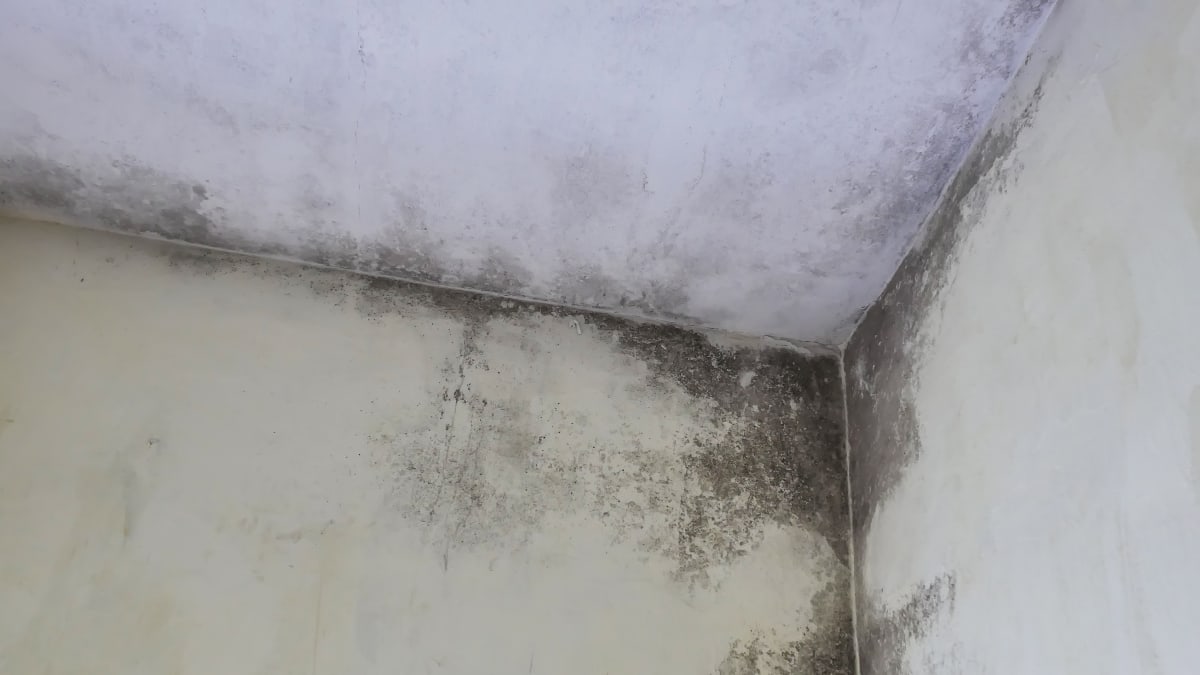
Mold can grow hidden in your home for months before you notice visible signs. By then, it may have already affected your indoor air quality and your family’s health. Here are the seven warning signs every Georgia homeowner should know.
1. Musty, Earthy Odors
The most common first sign of mold isn’t seeing it—it’s smelling it.
Mold produces microbial volatile organic compounds (MVOCs) that create a distinctive musty smell. If you notice:
- A damp, earthy odor in certain rooms
- Smells that get stronger when the AC runs
- Musty odors near walls, closets, or bathrooms
Don’t ignore it. Even if you can’t see mold, that smell means it’s growing somewhere.
2. Visible Mold Growth
This seems obvious, but many people don’t recognize mold when they see it. Mold can appear as:
- Black spots or patches
- Green or gray fuzzy growth
- White, thread-like formations
- Orange or pink stains (especially in bathrooms)
Important: What looks like a small patch of mold on your wall may be the tip of the iceberg. Mold often grows extensively behind surfaces.
3. Water Stains or Discoloration
Water damage almost always leads to mold if not addressed quickly. Look for:
- Yellow or brown stains on ceilings
- Bubbling or peeling paint
- Warped or buckled walls
- Discoloration around windows
If you see water damage, assume mold is present or developing—even if you can’t see it yet.
4. Unexplained Health Symptoms
This is the sign most people miss.
Mold exposure can cause symptoms that mimic allergies or a cold:
- Persistent sneezing or runny nose
- Itchy, watery eyes
- Chronic cough
- Skin irritation
- Headaches
- Fatigue
- Difficulty breathing (especially concerning)
The key indicator: Symptoms that improve when you leave the house and return when you come home.
If multiple family members have similar symptoms, or if symptoms persist despite treatment, mold exposure should be considered.
5. Condensation on Windows
Excessive condensation indicates high humidity—the perfect breeding ground for mold.
Watch for:
- Water droplets forming on windows regularly
- Fog that doesn’t clear quickly
- Water pooling on windowsills
High indoor humidity (above 60%) creates conditions where mold can grow on almost any surface.
6. Past Water Events
If your home has experienced any of the following, you’re at elevated risk:
- Flooding (even minor)
- Plumbing leaks
- Roof leaks
- Basement seepage
- HVAC system leaks
- Appliance failures (water heater, washing machine)
Mold can begin growing within 24-48 hours of water exposure. If water damage wasn’t professionally dried and treated, mold is likely present.
7. Peeling Wallpaper or Bubbling Paint
When moisture gets behind walls, it shows up as:
- Wallpaper pulling away from walls
- Paint bubbling or cracking
- Drywall that feels soft or spongy
- Baseboards pulling away from walls
These signs indicate moisture is trapped in your walls—and where there’s moisture, there’s likely mold.
What to Do If You Notice These Signs
Don’t Disturb It
Disturbing mold can release millions of spores into your air. Don’t:
- Scrub visible mold
- Tear out affected materials
- Use bleach (it doesn’t kill mold roots)
Get Professional Testing
Air quality testing can detect mold even when it’s not visible. Professional testing will identify:
- The type of mold present
- Spore concentrations in your air
- The likely source location
Address It Properly
DIY mold removal often makes problems worse. Professional remediation:
- Contains the affected area to prevent spread
- Uses proper equipment and techniques
- Treats the source, not just the surface
- Verifies results with post-treatment testing
The Spray Squad Approach to Mold
We use EPA-approved hypochlorous acid (HOCl) technology that:
- Kills mold at the source
- Is safe for your family (re-enter in 1 hour)
- Leaves no toxic residue
- Is verified with before-and-after air testing
Unlike traditional methods, our treatment doesn’t just remove mold—it creates conditions that prevent regrowth.
Worried about mold in your home? Schedule a professional mold inspection or call us at (706) 363-3350 for a free consultation.
Tags:
Related Services:
Have questions about mold remediation?